Long-form guide
The benefits of red light therapy: what is solid, what is promising, and what is still uncertain
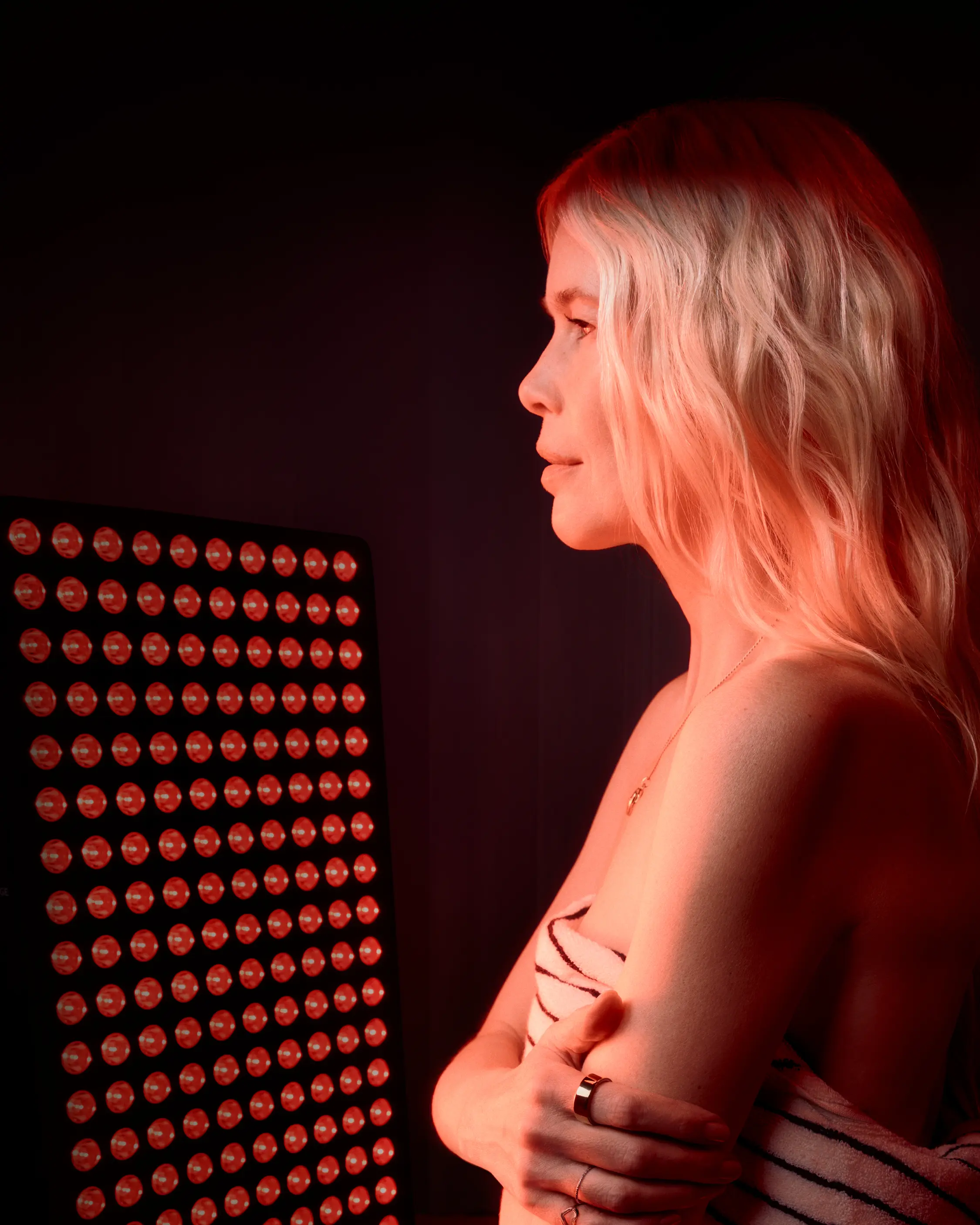
Red light therapy is more properly called photobiomodulation. It means using specific wavelengths of red or near-infrared light to influence how cells behave, especially how they handle energy, stress, and repair.
The idea is not new. What is new is how unevenly it is explained.
Some areas are supported by decent human evidence. Others are still early, mixed, or heavily dependent on how the treatment is done. Studies use different wavelengths, different power levels, different schedules, and different outcome measures. That makes it easy to cherry-pick results and surprisingly hard to talk honestly about what is actually established.
This page takes a slower approach. I group uses of red light therapy by how strong the human evidence is, point to the underlying studies, and call out where results depend heavily on protocol details. If something sounds impressive but rests on thin or indirect evidence, I say so.
Bird's-eye summary
| Use Case | State of Evidence | What the Literature Shows | Confidence |
|---|---|---|---|
| Skin and photoaging | Most mature consumer use case | Repeatable but modest improvements in texture, fine lines, and skin quality markers under consistent protocols | High |
| Acne support | Mixed, protocol-sensitive | Can reduce inflammatory lesions in some cohorts, often strongest as adjunctive care | Moderate |
| Pain and joint comfort | Real signal, variable execution | Knee OA and some tendon/myofascial protocols show benefit when wavelength and dose are appropriate | Moderate |
| Recovery | Promising but inconsistent transfer | Most consistent gains are soreness and recovery comfort; direct performance effects are less stable | Moderate |
| Hair and scalp (AGA) | Strongest non-skin category | Multiple controlled trials and pooled analyses support improved hair count metrics with sustained use | High |
How it works: real biology, narrow windows
Photobiomodulation is not about "heating tissue." Red and near-infrared light can influence mitochondrial signaling, especially pathways involving cytochrome c oxidase, nitric oxide signaling, and downstream inflammatory control. In practical terms, you are trying to nudge cells into a more favorable metabolic and repair state.
Here is the part that trips people up: this is dose-shaped biology, not linear biology.
Study after study describes a biphasic response. Too little light does very little. A moderate dose can help. Push the dose too far and the benefit flattens or even reverses. In many practical protocols, useful ranges are reported around roughly 5 to 50 J/cm2, depending on tissue and indication (Huang et al., 2009; Zecha et al., 2016).
That is why copying "ten minutes" from a study without matching the actual light delivered so often fails.
Data snapshot
- Common wavelengths: roughly 630-660 nm (more superficial) and 810-850 nm (deeper penetration)
- What actually sets dose: irradiance at your distance x time, not time alone
- Practical takeaway: if you do not know the output at your distance, you do not really know the dose
Bottom line: The biology is real, but the window is narrower than most marketing suggests.
Skin and photoaging: modest, repeatable gains
Skin is one of the strongest categories in human red light research. It is a superficial target, easier to dose, and easier to measure repeatedly. The better trials do not show miracles, but they do show consistent, modest improvements in texture, fine lines, and objective skin-quality markers.
In a controlled protocol using combined red and near-infrared exposure (633 nm + 830 nm), participants treated over 12 weeks showed improvements in complexion and skin feel, with histology suggesting collagen-related remodeling (Wunsch and Matuschka, 2014). More recent LED studies report a similar pattern: small but real gains, especially when protocols are applied consistently rather than sporadically (Couturaud et al., 2023).
Acne is more mixed. Some controlled and split-face studies report meaningful reductions in inflammatory lesions under structured light protocols, especially alongside other treatments. The clean reading is that red light can help the inflammatory side of acne, but it usually makes more sense as adjunctive care rather than a stand-alone solution for moderate to severe disease.
Data snapshot
- Typical skin protocols: 8-12 weeks, repeated sessions
- Acne: some strong results, but outcomes vary with severity and co-treatments
- Confidence: high for skin quality, moderate for acne alone
Bottom line: Skin is one of the clearest, most reproducible use cases, as long as expectations stay realistic.
Pain and joint comfort: real effects, fragile protocols
Pain is where you see both the promise and the mess of this field. There are credible positive signals in knee osteoarthritis, tendinopathy, and myofascial pain, but results depend heavily on whether studies get the parameters right.
Knee osteoarthritis is the clearest anchor. The meta-analysis by Stausholm et al. showed substantial variation across trials and made a blunt point: outcomes track protocol quality. When wavelength and dose fall into recommended ranges, results look better. When they do not, effects often disappear into the noise.
Tendon studies tell a similar story. Older meta-analyses found clinically meaningful pain reductions in well-parameterized trials, while poorly specified protocols were much more likely to report null results.
Data snapshot
- Knee OA: strongest pain evidence here, but effect sizes depend on dose
- Tendinopathy: benefits show up mainly in properly dosed protocols
- Confidence: moderate, higher when parameters are done properly
Bottom line: Red light for pain is not hype, but it is also not plug-and-play.
Recovery and performance: helps soreness, not magic
Recovery is heavily marketed and often oversold. Better trials suggest photobiomodulation can reduce muscle soreness and influence some fatigue or damage markers. Direct performance gains, however, are less consistent.
In controlled settings, studies report improvements in soreness trajectories and some biochemical markers after intense exercise, with timing and dose doing most of the work (Rossato et al., 2020; Vanin et al., 2018). The problem is transfer. Protocols that work in monitored athletic settings do not always survive contact with home devices of unknown output.
A sensible way to approach this is to treat recovery protocols like training blocks: fix your distance, keep timing consistent, track soreness plus one objective marker if possible, and judge results over weeks, not days.
Data snapshot
- Most repeatable endpoint: perceived soreness and recovery comfort
- Least stable endpoint: raw performance metrics
- Confidence: moderate for recovery comfort, low-to-moderate for performance
Bottom line: Think better recovery, not superhuman output.
Hair and scalp: slow, real, maintenance-dependent
Hair loss is one of the few areas where consumer interest and clinical evidence overlap meaningfully. The best-studied use case is androgenetic alopecia, where repeated low-level light exposure has improved hair count metrics versus sham in multiple controlled trials and meta-analyses.
A commonly cited randomized cap study reported roughly a 35% increase in hair count after 16 weeks under a structured protocol. Across pooled analyses, results generally favor active treatment, with side effects usually limited to mild, transient scalp warmth or tingling.
The catch is time and expectations. Hair protocols are slow. Most meaningful changes show up after three to six months, and maintenance is usually required.
Data snapshot
- Best-supported indication: early to moderate androgenetic alopecia
- Typical cadence: multiple sessions per week, for months
- Confidence: high, relative to most consumer uses
Bottom line: This is one of the strongest categories, but it rewards patience, not shortcuts.
My evidence view so far
My read of this literature is that red light therapy is real, but parameter-sensitive. Skin and hair have the strongest support. Certain pain and recovery uses look plausible when protocols are done properly. What fails most often is not the biology. It is the translation from controlled studies to casual home use.
If I were advising a careful first-time user, I would keep it simple: pick one outcome, control your distance, calculate dose from measured output, and run the protocol long enough to judge it honestly. Most disappointment comes from changing too many variables at once.
The sensible stance here is neither hype nor dismissal. Treat red light like a measurable intervention with a real dose window and it can be useful. Treat it like a "more is better" wellness trend and the results get noisy fast.
References
The references below focus on primary research and major reviews. Where findings are mixed, the text above reflects that.
- Huang YY, Chen AC-H, Carroll JD, Hamblin MR. Biphasic dose response in low-level light therapy. Dose Response (2009).
- Zecha JAEM, Raber-Durlacher JE, Nair RG, et al. Low level laser therapy/photobiomodulation in supportive care. Support Care Cancer (2016).
- Wunsch A, Matuschka K. Controlled trial in skin outcomes after red/NIR exposure. Photomed Laser Surg (2014).
- Couturaud V, et al. LED photobiomodulation for facial rejuvenation outcomes. Photobiomodul Photomed Laser Surg (2023).
- Stausholm MB, et al. Low-level laser therapy for knee osteoarthritis. BMJ Open (2019).
- Rossato M, et al. PBM effects on fatigue and biochemical markers. Photobiomodul Photomed Laser Surg (2020).
- Vanin AA, et al. PBM and delayed-onset muscle soreness outcomes. Am J Phys Med Rehabil (2018).
- Avci P, Gupta GK, Clark J, et al. LLLT for androgenetic alopecia. Lasers Surg Med (2014).
- Kim H, et al. Meta-analysis of low-level light therapy for androgenetic alopecia. Ann Dermatol (2017).
- Bjordal JM, et al. A systematic review with procedural assessments and meta-analysis of low level laser therapy in lateral elbow tendinopathy. BMC Musculoskelet Disord (2008).
Related guides
Turn evidence into a practical routine with the red light therapy dose calculator, review the biphasic dose response explanation, and compare devices in red light therapy reviews.